


9 Event Attendee Types: How to Increase Ticket Sales and Reduce No-Show Rates with the Right Approach
June 1, 2026
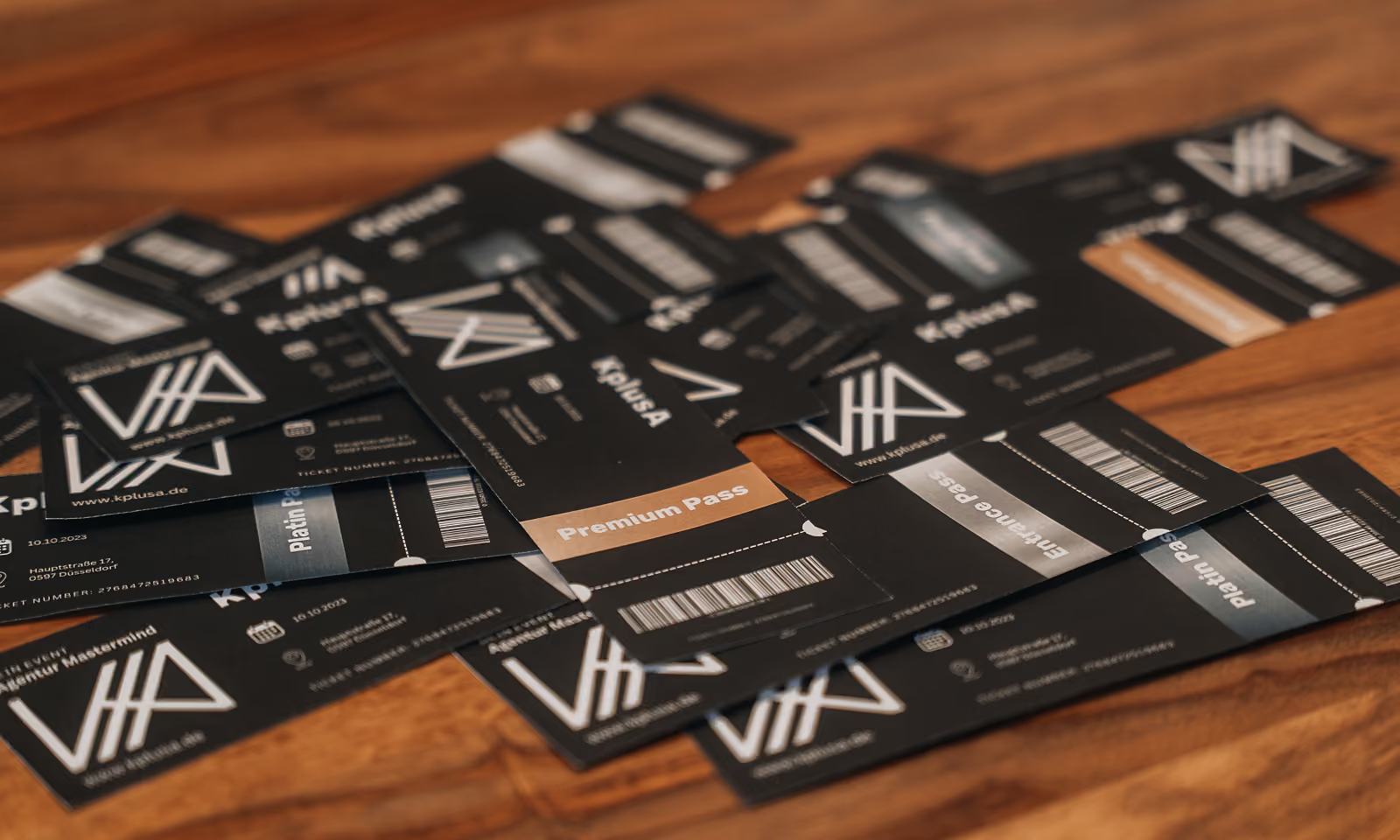
Boost ticket sales by segmenting your communication based on attendee motivations. There are nine typical patterns that repeatedly emerge, and different levers work for each type, such as scarcity, early bird offers, social proof, group deals, status, obligation, onboarding, adventure, or exclusivity. The key is to use these triggers in your campaign before the purchase and in your email marketing after the purchase, so that attendees actually show up.
What attendee types are
Attendee types are not target groups in the classic sense, but rather buying motives. Two people from the same industry can make completely different decisions because they view the event from a different psychological angle. This is precisely why the model is particularly helpful when you have an existing reach but your conversion isn't where you want it to be.
Step 1: Quick test to determine which types are relevant for your event
Before implementing everything, use a quick check to clarify which patterns dominate your format. An industry gathering attracts different types than an exclusive dinner or a training format.
Checklist for categorization
- Do your attendees buy privately or through their company?
- Is price a common objection or not?
- Do many come in groups or rather alone?
- Is the event more about presentation or networking?
- Is the goal more visibility, more leads, or a higher closing rate?
- Are there VIP components or is it intentionally not public?
Once you've answered these, you'll usually already recognize which three to five types are your revenue drivers. These types should be overrepresented in your communication.
The 9 Attendee Types and the Appropriate Communication
1. The Undecided
This type generally wants to attend, but gets stuck comparing options and looks for excuses to postpone the decision.
What works for him
- Clear deadline: price increases in 48 hours
- Scarcity: only 20 tickets left
- Bonus for quick decision: upgrade or extra session
Specific mistake
You send five reminders with the same text, but without a real reason to decide.
Practical approach
Implement a short deadline series where the consequence is visible, such as a price jump, limited ticket availability, or access to an additional service.
2. The Bargain Hunter
This type decides early if they feel they've gained an advantage. Without clear pricing logic, they'll wait or won't come at all.
What works for him
- Early Bird with clear savings
- Alumni price for previous attendees
- Bring a Friend discount that rewards both
Specific mistake
An Early Bird that is only minimally cheaper seems more like a cosmetic change and doesn't trigger action.
Practical approach
Give the Early Bird a clear statement, such as 20 percent cheaper until date X, and communicate the benefit not as a discount, but as a reward for early planning.
3. The Follower
This type wants social proof. They only book once they see that enough others have already joined.
What works for them
- Social Proof: 200 participants from the industry already registered
- Testimonials, ideally with a specific outcome
- Visibility: who is attending, for example, well-known companies or prominent figures
Common Mistake
You only show that the event is taking place, but not that relevant people are attending.
Practical Strategy
Use dynamic proof elements that are regularly updated in the campaign, such as participant numbers, industry mix, or top roles.
4. The Herd Follower
This pattern is similar to the follower, but with a crucial difference: it's not about mass, but about companionship. This type rarely goes alone.
What works for them
- Group discounts
- Team packages for companies
- Ticket logic like buy three, get the fourth free
Common Mistake
You only offer individual tickets, even though you know that many think in teams.
Practical Strategy
Set up a clear team package and name it accordingly so it's easier to get internal approval, e.g., Team Ticket including seating area and networking slot.
5. The Self-Promoter
This type wants to be seen and wants to be part of the story. This works particularly well for formats with a community character.
What motivates him
- VIP Ticket, Branding, visible benefits
- Mention on landing page or in the program
- Photo opportunities, press, stage, networking slots
Specific mistake
You only offer a standard ticket and wonder why a part of the target audience doesn't buy, even though there's interest.
Practical Approach
A clear VIP package that confers status without appearing awkward, for example, a VIP networking slot, a dedicated area, official photo material, fast access.
6. The Delegate
He comes because his employer sends him, or because the event is perceived as a mandatory appointment. Typical for training, certifications, mandatory updates.
What motivates him
- Corporate offers that facilitate approval
- Certificate or confirmation of attendance
- Clear positioning as a mandatory appointment for role X
Specific mistake
You communicate too generally, even though the real benefit is job security.
Practical Approach
In your communication, emphasize not just benefits, but necessity, for example, those who don't know this content will face problems next year.
7. The Newcomer
Newcomers are afraid of being out of place. They don't know how to prepare or what rules apply.
What resonates with him
- Onboarding Content: how to prepare
- Mentor or buddy system, even informal
- visible reassurance through established participants and well-known companies
Specific mistake
You communicate as if everyone is already part of the scene.
Practical approach
Create a short email sequence for newcomers explaining preparation, dress code, conversation starters, and the agenda, turning uncertainty into anticipation.
8. The Adventurer
This type seeks novelty. They don't want a standard conference, but something that feels and looks different.
What resonates with them
- exceptional location or unusual setting
- interactive formats, not just lectures
- Outdoor, hands-on, new talk formats, unusual panels
Specific mistake
You promote content, but not the experience format, even though that's precisely why this type buys.
Practical approach
Focus on the unique elements, such as workshops, masterminds, hot seat sessions, or special activities available only there.
9. The VIP
This is the decision-maker who prefers to remain unseen but will attend if exclusivity and discretion are guaranteed. This type avoids mass events because they see no added value and are intercepted by too many contacts.
What resonates with him
- Invitation instead of advertising
- small circle, closed session
- high-quality setting, no pretense
- other decision-makers at a similar level
A common mistake
You market a VIP offer publicly, thereby destroying the very character that is meant to be its appeal.
Practical Mechanics
Employ a discreet invitation process, communicating quality through attendee profiles, not through sheer volume.
{{callout}}
Step 2: How to implement the model in campaigns
The model only yields results if you operationalize it. You don't need nine completely separate campaigns, but you do need components that address the core motivations.
A practical setup that works for many events
- Landing page with proof and clear ticket logic: Standard, Team, VIP
- Email sequence with three motivational clusters: Price, Proof, Exclusivity
- Social content that alternately appeals to newcomers, adventurers, and followers
- Retargeting ads that target by type, not by generic reminders
Step 3: Reduce no-show rates by reinforcing motivations post-purchase
Many tickets aren't lost because calendars are full, but because the motivation wasn't strong enough. If someone only bought because it was cheap at the time, they need different reinforcement after the purchase.
Checklist for Post-Purchase Email Marketing
- Newcomers receive preparation and reassurance
- Socializers get team incentives, such as who else is attending
- The undecided receive validation that their decision was correct
- Self-promoters get early content spots, photo opportunities, and VIP tips
- Delegates receive validation and a clear rationale
- High-ranking individuals receive discreet arrangements, with clear guidance on arrival and access
Case study from 320+ projects
Across several events with mixed target audiences, we observe a recurring pattern: The campaign had strong content, but conversion only significantly increased once the ticketing logic was segmented. As soon as a team package and a discreet VIP offer were introduced alongside the standard ticket, more decision-makers could be attracted without having to raise the price for everyone. Simultaneously, the no-show rate decreased because participants received more tailored guidance after purchase, instead of just a generic confirmation.
Conclusion
If you want to increase ticket sales, it's not enough to post more or send more reminders. You need to target more effectively, specifically addressing the motivations that already exist.
With the nine attendee types, you can:
- Refine campaigns without increasing volume
- Sell earlier because decisions become easier
- Lower the no-show rate because motivations are stabilized
- Differentiate tickets without diluting the event
Ticket Conversion Audit
If you feel your event is fundamentally interesting but conversion isn't where it should be, it's worth taking a quick look at the psychology, not the budget.
We offer a Ticket Conversion Audit where we jointly examine:
- which three to five attendee types are dominant for you
- which triggers are missing from your communication
- what ticket logic you can implement immediately
- how to design your emails and landing pages to reduce participant drop-offs
If you like, send us your landing page, ticket prices, and target audience. We'll then give you a clear assessment of where you can find the quickest leverage.
Häufig gestellte Fragen
How do I find out which attendee types dominate my event?
Do I need to build a separate campaign for each type?
Which ticket types almost always make sense?
How can I reduce the no-show rate?
What is the biggest mistake in event marketing campaigns?
Über den Autor

Kevin Arenja
CEO
Kevin Arenja is founder and managing director of KPlusa Communications. As TÜV-certified expert in sales psychology, lecturer in event management At THM Technische Hochschule Mittelhessen and IHK examiner, he brings deep Expertise and over 12 years of industry experience with — from strategic roadshows to sales events to international events with up to 3,500 guests. After a B.A. in Media and Event Management, one MBA in Business Administration and his Apprenticeship as an event manager Did Kevin well over 320 projects implemented for corporations, medium-sized companies and hidden champions. His mission: Events measurably successful to do — with emotional relevance, clear strategy and an eye for what really works.
Weitere interessante Artikel
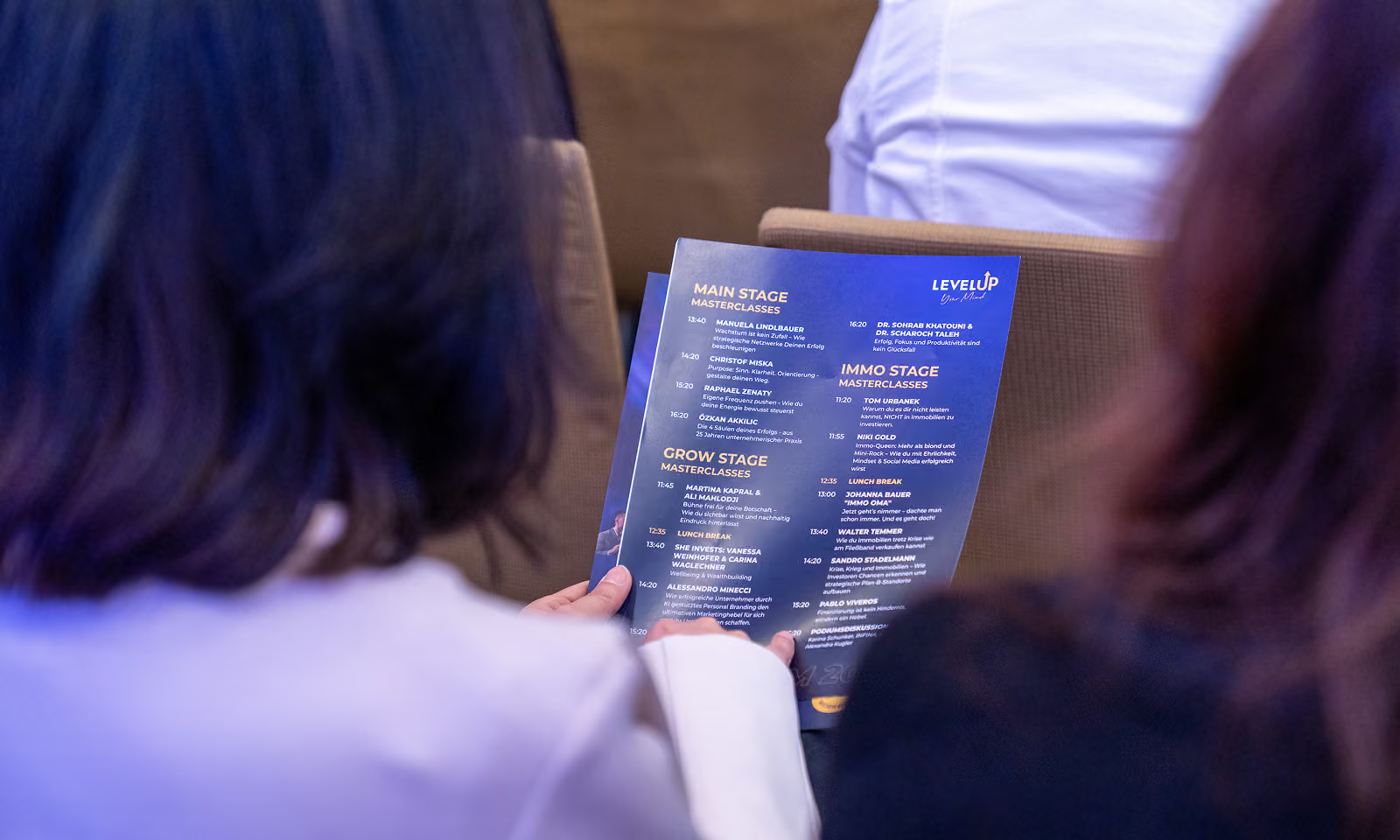
This is how you build an event agenda that measurably increases revenue and motivation
An event agenda is not a schedule.
It is a sales tool.
If your agenda merely strings together program items, you'll get applause for the catering. But no results.
If your agenda is psychologically structured, you'll get leads, motivation, clarity, or revenue.
So the question is not: Which speakers should we book?
The question is: What thought process should your attendees go through?


Events as a marketing lever: How to deploy the right format at the right stage and measurably increase sales and retention
Many companies organize events too early, too vaguely, or without proper integration into marketing and sales. You know the result: good food, pleasant conversations, no impact.
If you want to use events as a tool, you don't need a new list of ideas. You need a decision: In which phase of customer acquisition or retention should the event have an impact, and which format precisely contributes to that goal.
This article provides you with a clear model that allows you to decide in 15 minutes whether an event is currently worthwhile, which format fits, and which mistakes you need to avoid.

The Campfire Matrix: How to design events that are memorable and drive more conversions
Many events end up feeling the same. You were there. You ate. You shook a few hands. And two weeks later, no one remembers what it was about.
If you truly want your event to make an impact, you don't need a bigger budget. You need a system that prevents your event from falling apart conceptually.
The Campfire Matrix is exactly that system. It ensures that your event isn't just pleasant, but creates memories and delivers results.