Insights & Strategies for Events that make a greater impact
Experience, insights, and inspiration from over 320 projects. Trends, tools, locations, and perspectives for everyone who doesn't just organize events – but wants to make an impact with them.
Recommended articles

Events as a marketing lever: How to deploy the right format at the right stage and measurably increase sales and retention
Many companies organize events too early, too vaguely, or without proper integration into marketing and sales. You know the result: good food, pleasant conversations, no impact.
If you want to use events as a tool, you don't need a new list of ideas. You need a decision: In which phase of customer acquisition or retention should the event have an impact, and which format precisely contributes to that goal.
This article provides you with a clear model that allows you to decide in 15 minutes whether an event is currently worthwhile, which format fits, and which mistakes you need to avoid.

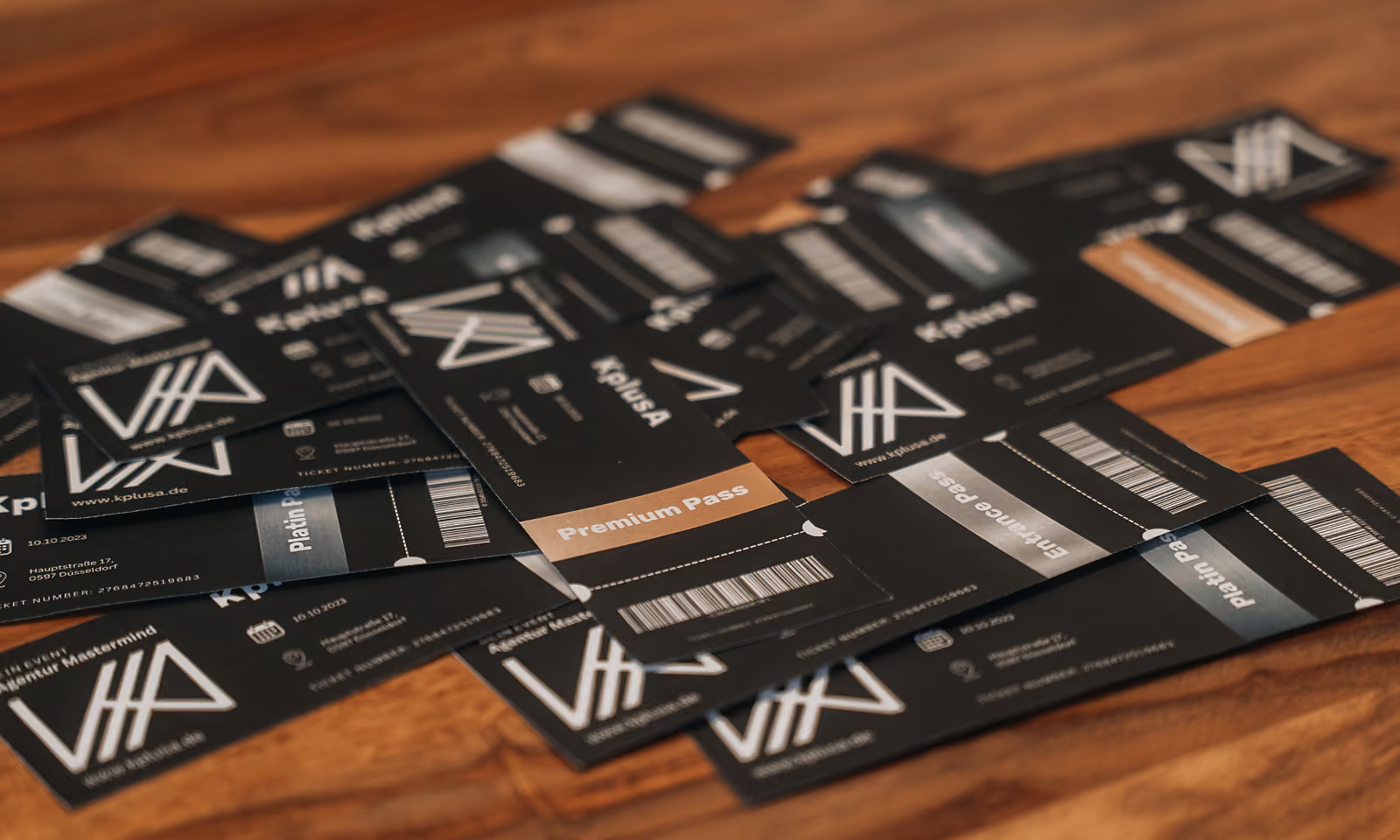
9 Event Attendee Types: How to Increase Ticket Sales and Reduce No-Show Rates with the Right Approach
When ticket sales stall, the wrong levers are often pulled. Landing pages are revamped, budgets increased, or another reminder email is sent that reads just like the last one. What's often overlooked: Not every attendee buys for the same reason, and not everyone responds to the same triggers. Some need security, others need status, still others need a clear price advantage or simply the feeling that they won't be going alone.
If you address all attendees with the same invitation, you'll get predictable results. Some book immediately, the rest get stuck, and in the end, too few buy or they buy too late. At the same time, the no-show rate increases because attendees without a clear motive are more likely to drop out.
In this article, you'll get a practical model with nine recurring attendee types, including specific triggers, text module ideas, and campaign mechanics, with which you can increase conversion, sell earlier, and reduce cancellations.
All Blog Posts
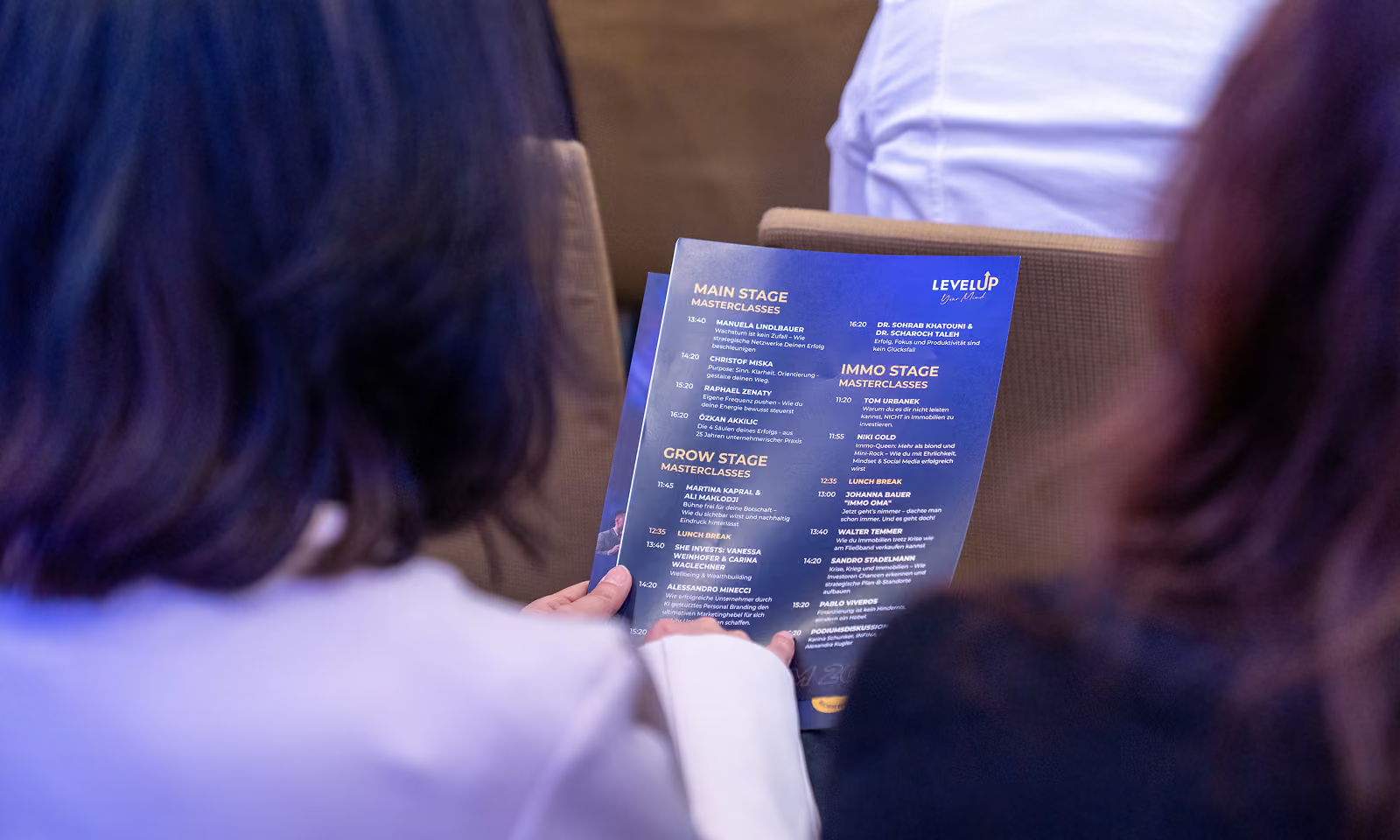
This is how you build an event agenda that measurably increases revenue and motivation
An event agenda is not a schedule.
It is a sales tool.
If your agenda merely strings together program items, you'll get applause for the catering. But no results.
If your agenda is psychologically structured, you'll get leads, motivation, clarity, or revenue.
So the question is not: Which speakers should we book?
The question is: What thought process should your attendees go through?

Events as a marketing lever: How to deploy the right format at the right stage and measurably increase sales and retention
Many companies organize events too early, too vaguely, or without proper integration into marketing and sales. You know the result: good food, pleasant conversations, no impact.
If you want to use events as a tool, you don't need a new list of ideas. You need a decision: In which phase of customer acquisition or retention should the event have an impact, and which format precisely contributes to that goal.
This article provides you with a clear model that allows you to decide in 15 minutes whether an event is currently worthwhile, which format fits, and which mistakes you need to avoid.

The Campfire Matrix: How to design events that are memorable and drive more conversions
Many events end up feeling the same. You were there. You ate. You shook a few hands. And two weeks later, no one remembers what it was about.
If you truly want your event to make an impact, you don't need a bigger budget. You need a system that prevents your event from falling apart conceptually.
The Campfire Matrix is exactly that system. It ensures that your event isn't just pleasant, but creates memories and delivers results.

How to turn an event into a content machine: Plan for social media before, during, and after the event
Most companies think of event content as an aftermovie. A nice video, a short-lived peak, and that's it.
The problem: An aftermovie rarely sells tickets, rarely books appointments, and almost never builds trust. It's a memory, but not a machine.
If you use social media correctly, your event becomes a content source for weeks, sometimes months. Before the event for registrations, during the event for reach and FOMO, afterwards for follow-up business, applications, or the next event.
Here's the clear plan.


Measuring Event ROI: 5 Metrics to Justify Budget and Prove Impact
When planning an event, the same question always arises, at the latest when the budget is approved: Are we burning money here, or are we creating measurable value? This question is valid because events quickly get pigeonholed into a category where only the catering is ultimately evaluated.
The core problem rarely lies with the event itself, but with the measurement approach. Many companies measure events solely by direct revenue, even though an event often has the strongest leverage in entirely different areas. Those who only calculate revenue minus expenses see only a fraction of the effect and are strategically hindered by this, even though the event can actually be a highly efficient accelerator for sales, brand, retention, or even recruiting.
In this article, you will receive a clear KPI system that allows you to measure Event ROI multi-dimensionally, make a strong internal case, and identify the key factors that truly determine success or failure.
9 Event Attendee Types: How to Increase Ticket Sales and Reduce No-Show Rates with the Right Approach
When ticket sales stall, the wrong levers are often pulled. Landing pages are revamped, budgets increased, or another reminder email is sent that reads just like the last one. What's often overlooked: Not every attendee buys for the same reason, and not everyone responds to the same triggers. Some need security, others need status, still others need a clear price advantage or simply the feeling that they won't be going alone.
If you address all attendees with the same invitation, you'll get predictable results. Some book immediately, the rest get stuck, and in the end, too few buy or they buy too late. At the same time, the no-show rate increases because attendees without a clear motive are more likely to drop out.
In this article, you'll get a practical model with nine recurring attendee types, including specific triggers, text module ideas, and campaign mechanics, with which you can increase conversion, sell earlier, and reduce cancellations.
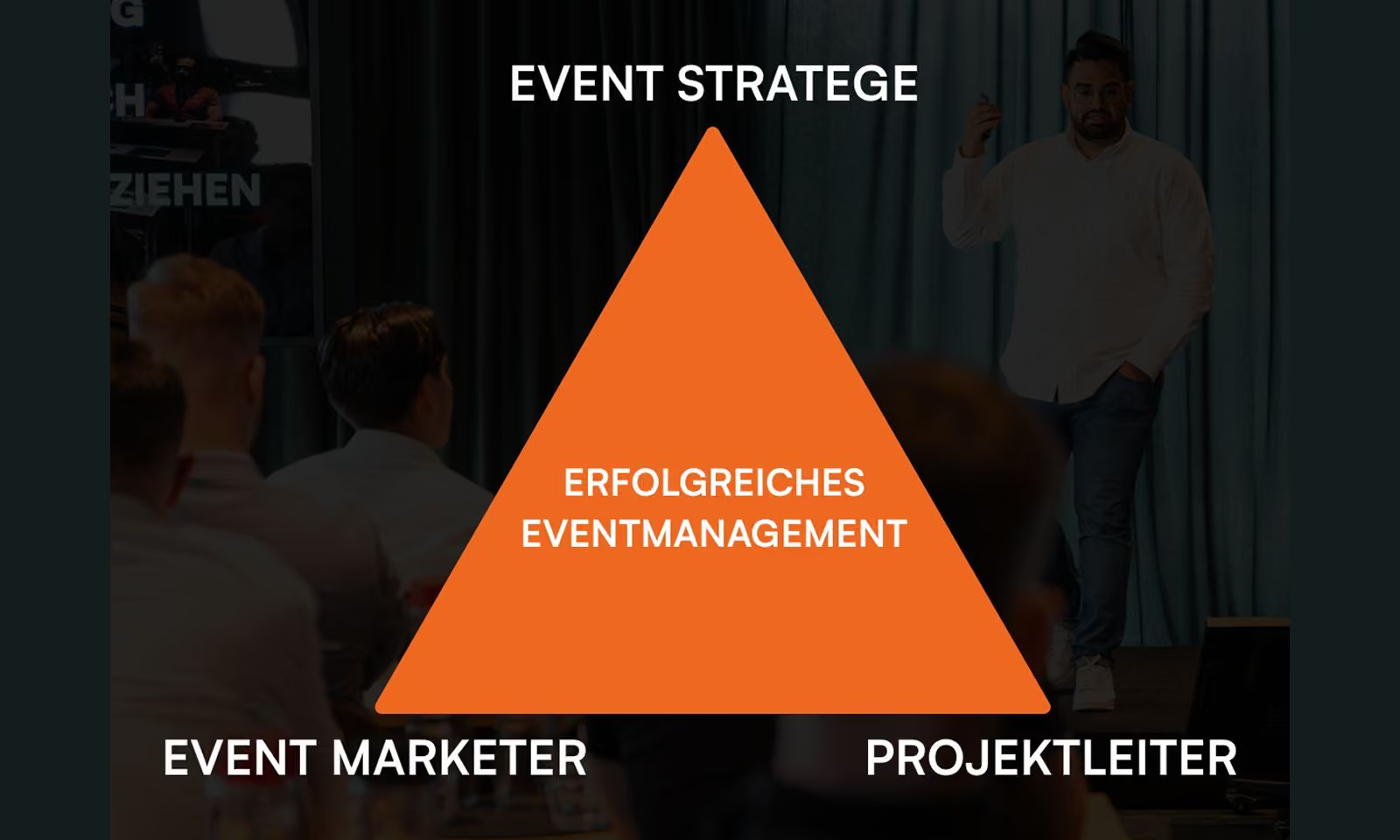
Assistant, project manager, or event agency: who should really be responsible for your event to ensure it delivers results?
Before their first major event, many companies ask a seemingly logical question: Can’t this just be handled by an assistant who organizes everything anyway, or an internal project manager with a structured approach? On paper, it sounds efficient. In practice, it is one of the main reasons why events take place but fail to deliver tangible results—leaving you with nothing but a high bill and the feeling that the whole process was unnecessarily exhausting.
The issue isn't whether your assistant is competent. The issue is that a successful event is actually three different jobs rolled into one. If only one of these is covered, the event will either be well-organized but strategically thin, have a great concept but attract no attendees, or be well-marketed but fail to deliver on its promises.
In this article, you will get a clear role model with guidance on when internal organization makes sense, where the limitations lie, and how to build a setup that delivers results without burning out your internal teams.